




The year of the avocado: Fierce competition and record volumes shaped the 2025 market
 Add Fresh Fruit Portal to Google
If 2025 had a defining flavor in the produce aisle, it would be avocado. The United States market is awash in green gold as record volumes pour in from domestic and international packinghouses, as well as fast-expanding South American origins.
With promotions in full swing and fruit available nearly everywhere, the category is thriving at retail. However, behind the boom, intensifying competition, soft pricing, and policy tensions are keeping growers and shippers on edge.
In the US, volumes are on track to surpass 3 billion pounds by the end of 2025, marking a record milestone. The projection comes amid robust retail performance, heavy imports led by Mexico, and large domestic crops in California, reinforcing the fruit’s position as a key driver of the produce department.
A growing competitor landscape
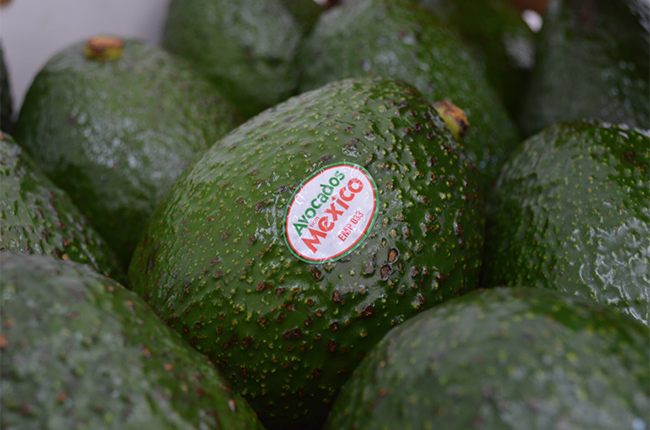
Mexico remains the backbone of US supply, shipping an estimated 110,000 tons for Super Bowl demand alone, according to the Association of Avocado Producers and Packers Exporters of Mexico (APEAM).
Michoacán and Jalisco remain the only Mexican states authorized to ship to the US, despite the Nayarit government wrongly stating it had the green light for exports north of the border earlier this month. APEAM reports that avocados from Mexico reach more than 34 countries, even as the US remains the top consumer with a per-capita intake of about 9 pounds per year.
California, meanwhile, is posting its largest crop since 2020. The California Avocado Commission (CAC) projects approximately 375 million pounds for the 2025 season, supported by years of new plantings and improved orchard management. As of mid-season, about 53 percent of the crop had been harvested, leaving more than 161 million pounds still on the trees.
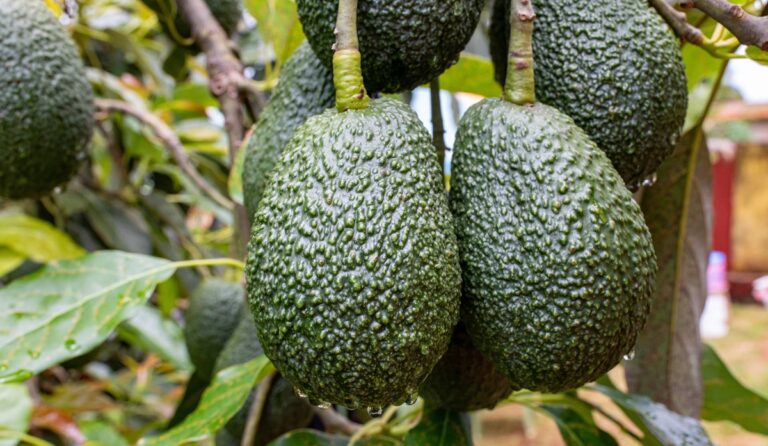
Photo courtesy of ADEX
Despite the Golden State’s bountiful year, global suppliers from South America are also shaping the US market. Peru exported about 1.2 billion pounds last year and aims to reach 2.2 billion pounds of production by 2030, according to the country’s ProHass committee.
The Latin American country’s exports reached 692 thousand tons and 70 international destinations following the recent opening of the Philippine market. Europe remains the primary market.
Chile recorded a 15-year production high of 240,000 tons in the 2024–25 season, helping fill seasonal gaps in North America. The final figures represent a 60 percent increase from the 150,000 tons produced during the 2023-24 season.
Colombia continues to expand shipments to the US, with exports up roughly 90 million pounds year-on-year through October, according to a report by market data and insight firm Blue Book. Colombian Hass Avocado Producers and Exporters Corporation (CorpoHass) says the country expects avocado exports to reach 182,000 tons—a 25 percent increase over last year.
Of that total, 60 percent is destined for Europe, and 40 percent to the United States, showing American demand for avocados is still on the rise. The Avocados from Colombia country-brand effort and promotional campaigns at international fairs have been key in boosting the fruit’s visibility in America.
The Asian avocado market continues to expand, albeit at a more moderate pace. According to the report Avocado Market Overview 2024 by IndexBox, consumption in the region reached nearly 1.6 million tons in 2024, with an estimated value of $2.3 billion.
Projections indicate sustained growth until 2035, with an average annual rate of 2.1 percent in volume and 2.6 percent in value, which could bring regional consumption to 2.1 million tons and $3.1 billion by that date.
Indonesia accounts for 53 percent of regional consumption (around 870,000 tons) and 59 percent of production. Other relevant markets are Vietnam and China, with around 200,000 and 186,000 tons, respectively.
Big games, big numbers
Retail demand has kept pace with supply. The Hass Avocado Board (HAB) posted its strongest Big Game performance in four years, with $74.4 million in sales from 64.9 million units sold, according to the organization’s Avocado Holiday Retail Recap. That represents a 25 percent increase in dollar sales year-over-year. Promotional pricing played a key role, particularly for large fruit in California and small fruit nationally.
Momentum continued through the spring. Q2 2025 holiday sales, including Easter, Cinco de Mayo, Memorial Day, and Father’s Day, reached four-year highs, totaling 218.4 million units and $270.1 million. Memorial Day alone delivered 54.0 million units, making it the third-largest avocado holiday after the Big Game and Cinco de Mayo.
Throughout the year, the US avocado category posted 12 percent dollar growth and 4 percent volume growth, outpacing the total produce category, according to HAB Regional Composite Reports. Average selling price reached $1.22 per unit.
Pest pressures
Laurel wilt (LW) disease, a well-known vascular fungal pathogen, has long caused ample losses in the Florida avocado sector. Only last year, LW infected around 300,000 trees, incurring financial damages of more than $46 million for the Sunshine State.
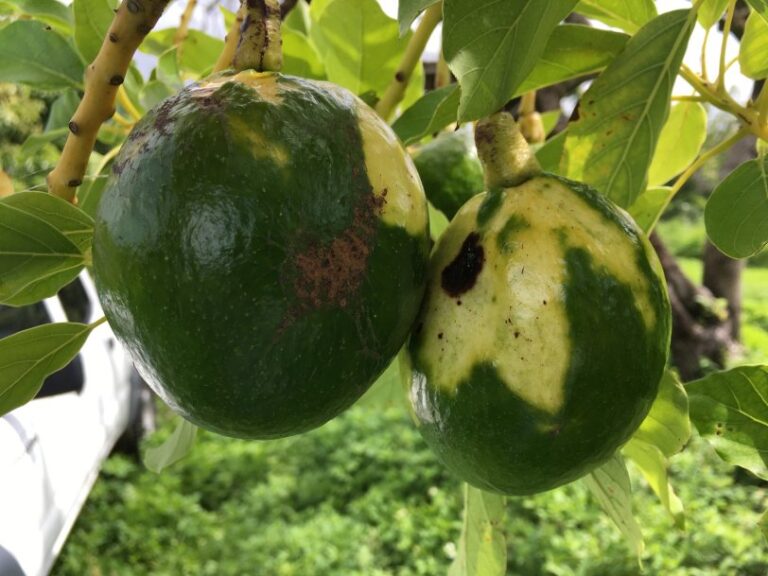
Photo courtesy of UF/IFAS.
Its devastating effects led growers to intensify replanting efforts, which inadvertently renewed the threat posed by sunblotch viroid (ASBVd). This disease can cut yields by up to 80 percent and render fruit unmarketable.
Although there is no cure, early detection, sanitation, and education can prevent long-term economic damage. The University of Florida (UF) is increasing support to growers through digital resources, social media, and UF’s Institute of Food and Agricultural Sciences’ Tropical Research and Education Center (TREC)’s on-site plant clinic in Homestead, FL.
Ripe for change: Rethinking production and consumption
Avocados’ popularity goes beyond being a topping for toast. Ingredient usage has opened broad possibilities for consumers.
Along the same lines, the fruit’s health benefits have long been studied. A recent analysis revealed that incorporating avocados into the diet can improve gut health by positively influencing the microbiota of adults living with abdominal obesity—even without any caloric restrictions.
The crop’s high water use often gives avocados a bad rap among international environmental whistleblowers. Echoing these concerns, sustainability and compliance have remained in focus amid the growing demand.
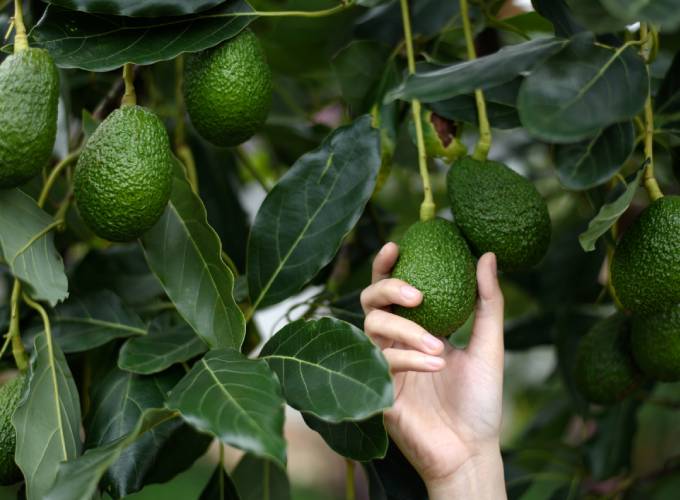
Mexican authorities report that 90 percent of avocados exported to the US now carry ProForest certification, confirming they are deforestation-free.
Companies such as avocado giant Westfalia have also doubled efforts to achieve a sustainable agro-export model focused on quality, technology, and alliances with small, medium, and large producers.
The firm also unveiled its avocado variety library at Fruit Attraction 2025 in Madrid, Spain. The initiative aims to encourage the development of future avocado varieties better tailored to consumers’ tastes.
Plenty of fruit, plenty of debate
An abundant supply has pressured pricing. Rabobank reports that Hass avocado shipping-point prices fell to about $32 per carton in October, the lowest since 2020 and 58 percent below the start of the California season. The firm attributes the decline to increased imports from Mexico and strong global output.
Oversupply concerns have fueled policy debate. In December, CAC President Ken Melban urged federal officials reviewing the United States-Mexico-Canada Agreement (USMCA) to address low-priced imports and pest risks, citing grower returns that dipped to $1.08 per pound last August.
Internationally, cadmium findings in limited shipments from Peru and the US have prompted tighter scrutiny in markets such as the European Union and Taiwan. However, industry groups emphasized at the time that detections represented a tiny share of total trade.

The tariff debacle was another source of stress for the international avocado market. Since 1994, Mexican avocados have been exempt from tariffs, a deal reinforced with the signing of the USMCA in 2020.
Confusion surrounding a proposed 25 percent tariff on Mexican agricultural products in April caused widespread concern. However, the Trump Administration later issued an executive order granting tariff exemptions on avocados and other agricultural products, regardless of their country of origin.
Despite these challenges, demand remains strong. HAB attributes continued growth to coordinated promotions, year-round availability, and multi-origin sourcing.
With California fruit still moving, Mexico gearing up for another Super Bowl surge, and South American origins expanding their footprint, the US avocado market enters 2026 with record volumes, intense competition, and a category that shows no sign of slowing.
Related stories
Super Bowl brings massive US avocado consumption amid tariff threats










