








US expands list of Brazilian exempted products ahead of 25 percent tariff enactment



The strained political and economic relationship between the United States and Brazil continues, as the date for the implementation of the 25 percent tariffs on the Latin American giant approaches.


In a final update issued by the office of the US Trade Representative (USTR) on July 15, its ambassador, Jamieson Greer, updated the list of tariff-exempt Brazilian exports to the US ahead of July 22, when the first set of levies under Section 301 of the US Trade Act of 1974 will take effect. The list now includes beef, coffee, rare earths, energy products, aircraft, and aircraft parts.
The 25 percent tax is the result of an investigation by Greer's office that started in 2025 after the Trump Administration accused Brazil of unfair trade practices. Among the claims, the US alleges unfair treatment of US-based tech companies by Brazilian courts, insufficient enforcement efforts to combat bribery and corruption, illegal deforestation, and violations of intellectual property rights.
Another batch of tariffs may be coming Brazil's way
Unfortunately, this set of tariffs is not the last to levy Brazilian exports, as there's another that might go into effect soon. The country is on a list of 54 nations involved in another USTR investigation under Section 301, this time alleging they have failed “to impose and effectively enforce a prohibition on the importation of goods produced with forced labor.”
The probe is set to conclude on July 24, and if successful, it could result in an additional 12.5 percent tariff on Brazilian goods, bringing the total to 37.5 percent on the country's exports to the US. According to the American Chamber of Commerce for Brazil, this would place the Latin American nation "among the countries facing the most restrictive conditions of access to the US market," Reuters reports.
Brazil ships 18 percent of its exports to the United States, accounting for $7 billion in annual trade.
Brazil alleges political persecution
In its final update, the USTR Ambassador claimed the US remains open to negotiations with Brazil, but these days, diplomatic relationships between the two countries are chafing, to say the least.
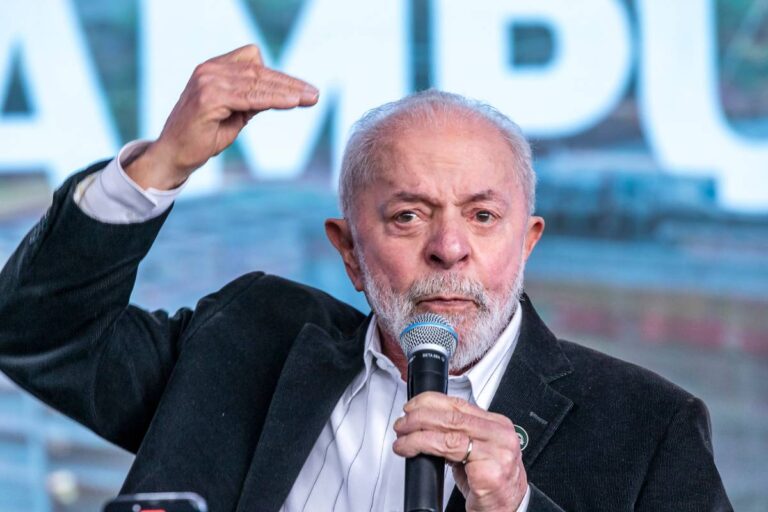
Brazil's President Luis Inacio Lula da Silva (who is up for reelection in October) has publicly claimed the driver behind the USTR probes is not economic but political. The head of state has cited his country's trade deficit with the US as proof that there are no unfair practices on Brazil's part, and the Trump Administration's close relationship with the Bolsonaro family as the reason for the animosity against him.
Flavio Bolsonaro, son of former Brazilian President Jair Bolsonaro, who was sentenced to 27 years in jail for planning a coup d'etat, was received by President Donald Trump at the White House back in May. Bolsonaro, now a senator, is competing against the sitting president in the October elections.
Meanwhile, the US Secretary of State Marco Rubio has publicly criticized Lula on X, saying Brazil has not come to the negotiating table in good faith and claiming the head of state is putting his ego ahead of the welfare of the Brazilian people.
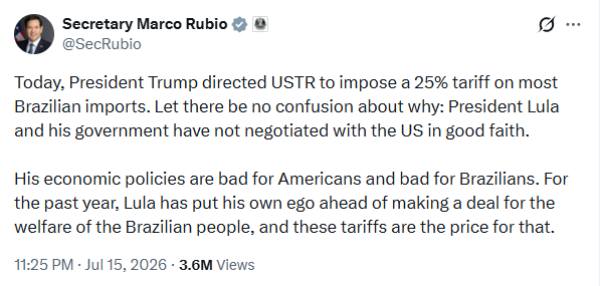
Source: x.com/SecRubio
*All images are referential.
Related stories
Section 301: A new era of tariffs, explained
Opinion | The ebb and flow of tariffs and Brazil's new trade map









Subscribe to our newsletter